

When purchasing sandwich panels for an industrial building, providing only the required panel thickness and total quantity is rarely enough to obtain an accurate quotation.
Different panel manufacturers may offer products with different core materials, metal facings, connection profiles, coating systems, and performance characteristics.
If these details are not clearly specified, buyers may receive quotations that appear comparable but actually refer to different product configurations.
For international buyers, contractors, engineering companies, and industrial project owners, preparing a clear sandwich panel technical specification is an important step toward efficient procurement.
This guide explains what information should be included in a sandwich panel RFQ (Request for Quotation).
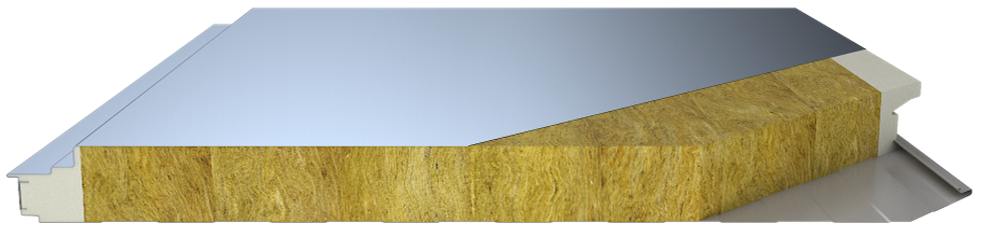
The first step is to explain where the sandwich panels will be installed.
Common applications include:
External walls of industrial factories.
Internal partitions.
Temperature-controlled production areas.
Cold storage facilities.
Wall panels and roof panels often have different profiles, connection structures, and performance requirements.
For example, a warehouse roof panel must be selected with consideration for roof slope, wind loads, drainage, and supporting structure spacing.
A wall panel may require different fixing arrangements and surface finishes.
Clearly identifying the intended application helps manufacturers recommend suitable products.
The insulation core is a fundamental part of sandwich panel specifications.
Two common options for industrial building envelopes are rockwool and PIR.
|
Item |
Rockwool Sandwich Panel |
PIR Sandwich Panel |
|---|---|---|
|
Core material |
Mineral wool |
Polyisocyanurate |
|
Main consideration |
Fire performance |
Thermal insulation |
|
Typical applications |
Industrial facilities with fire-related requirements |
Energy-conscious industrial buildings |
|
Additional evaluation |
Density, orientation, tested assembly performance |
Thermal conductivity, fire performance, tested assembly performance |
The actual product performance depends on the panel construction, core characteristics, facing materials, joints, and relevant test results.
Buyers should specify the required core material rather than simply requesting an insulated sandwich panel.
Panel thickness directly affects the overall insulation performance and building envelope design.
Commonly specified thicknesses vary by product type and manufacturer.
The appropriate thickness should be determined according to:
Indoor and outdoor design temperatures.
Required thermal performance.
Local climate.
Energy efficiency targets.
Building application.
Applicable fire and building regulations.
For example, a factory operating in a hot climate may have different insulation requirements from a warehouse in a cold region.
It is also important to distinguish between total panel thickness and the thickness of the metal facings.
When requesting a quotation, buyers should clearly state the required insulation core thickness or overall panel thickness according to the manufacturer's specification format.
The metal facings protect the insulation core and form the external surfaces of the panel.
Their specifications influence durability, corrosion resistance, appearance, and maintenance requirements.
Buyers should consider:
Base metal
Specify the required steel material and applicable standard.
Steel thickness
Clarify whether the requested thickness refers to the base steel thickness or another measurement. Nominal and actual thickness conventions should be confirmed.
Coating type
Common metal coating options may include galvanized or other metallic-coated steel, depending on the application.
Paint system
The coating system and color should be selected according to the environmental exposure and architectural requirements.
For buildings located near coastal areas or in industrial environments, corrosion protection deserves particular attention.
Panel dimensions affect transportation, installation, material usage, and project cost.
An RFQ should ideally include:
Effective panel width.
Required panel lengths.
Panel thickness.
Joint profile.
Installation direction.
Roof or wall application.
Required accessories.
The effective coverage width is particularly important.
Some panel products have different overall widths and effective installation widths. Buyers should avoid calculating quantities using overall dimensions without confirming the actual coverage width.
Joint profiles should also be considered because they influence panel connection, installation procedures, and envelope performance.
Different industrial buildings have different performance requirements.
Instead of using general descriptions such as "high-quality" or "heavy-duty," buyers should provide measurable requirements wherever possible.
Important considerations include:
Fire performance
Specify the required fire classification or test standard based on local regulations and project design.
Thermal performance
Provide the required thermal transmittance (U-value), thermal conductivity requirements, or relevant design targets.
Wind resistance
Specify the project design wind pressure and relevant fixing requirements.
Water tightness
Clarify the expected performance requirements for roof and wall systems.
Acoustic performance
Where noise control is important, identify the required acoustic performance and relevant test method.
Manufacturers can then evaluate whether the proposed panel construction is suitable.
For overseas industrial construction projects, technical documentation is an important part of the procurement process.
Depending on the destination market and project requirements, buyers may request:
Product technical data sheets.
Fire test reports.
Thermal performance documentation.
Wind resistance test reports.
Water penetration test documentation.
Quality management certificates.
Applicable product compliance documentation.
It is important to distinguish between company-level certifications and product-specific test reports.
A manufacturer's quality management certification does not automatically prove that every panel configuration meets a particular fire or structural performance requirement.
Buyers should request documentation relevant to the actual product being quoted.
A technically accurate quotation also requires commercial and logistics information.
For international procurement, the RFQ should include:
|
Item |
Information Required |
|---|---|
|
Project location |
Country and city |
|
Building type |
Factory, warehouse, logistics center, etc. |
|
Panel application |
Roof, external wall, or partition |
|
Panel specification |
Core material and thickness |
|
Panel quantity |
Square meters or detailed panel schedule |
|
Panel dimensions |
Effective width and required lengths |
|
Accessories |
Flashings, fasteners, trims, and other components |
|
Delivery destination |
Port or project location |
|
Delivery terms |
Preferred Incoterms, if known |
|
Required delivery date |
Expected shipping or project schedule |
For containerized shipments, panel length, packaging dimensions, loading arrangements, and weight should also be reviewed.
The minimum order quantity should be confirmed with the supplier before proceeding.
A low quotation does not necessarily represent the best purchasing decision.
When comparing suppliers, buyers should check whether the quotations are based on equivalent specifications.
A useful comparison should include:
Core material and actual panel thickness.
Metal facing thickness and coating.
Effective panel coverage width.
Joint profile and connection details.
Available performance documentation.
Packaging and shipping arrangements.
Manufacturing lead time.
Warranty terms and technical support.
If two suppliers quote different specifications, their prices should not be compared directly.
A structured comparison helps reduce misunderstandings and improves procurement transparency.
Q1: What information should I provide when requesting a sandwich panel quotation?
At minimum, provide your project location, building application, core material, panel thickness, estimated quantity, panel dimensions, and delivery destination. Drawings and detailed specifications will help manufacturers provide more accurate quotations.
Q2: What is the minimum order quantity for industrial sandwich panels?
MOQ varies by manufacturer, product type, panel thickness, and production arrangements. Buyers should confirm the minimum production quantity and any setup or special production charges before placing an order.
Q3: Should I specify the steel thickness or total panel thickness?
Both are important. Total panel thickness relates to the insulation core and overall construction, while metal facing thickness relates to the steel skins. The quotation should clearly identify each measurement.
Q4: Can sandwich panel suppliers recommend specifications based on building drawings?
Yes. Providing architectural elevations, roof plans, cross-sections, and relevant technical requirements allows manufacturers to evaluate panel applications and recommend suitable product configurations.
Q5: Do I need to purchase accessories together with sandwich panels?
It is generally advisable to coordinate flashings, trims, fasteners, and other connection components with the selected panel system. This helps maintain compatibility and simplifies procurement.
Preparing a detailed sandwich panel technical specification is one of the most effective ways to improve the industrial building procurement process.
By defining the core material, thickness, metal facings, joint profiles, performance requirements, quantities, and delivery conditions, buyers can obtain more meaningful quotations and make better purchasing decisions.
WISKIND specializes in insulated metal wall and roof panel solutions for industrial buildings, including rockwool and PIR sandwich panels.
If you are planning a factory, warehouse, or other industrial construction project, send us your project drawings and preliminary requirements. Our team can help evaluate the appropriate panel solutions for your application.

Пожалуйста, продолжайте читать, оставайтесь в курсе, подпишитесь, и мы приветствуем вас, чтобы рассказать нам, что вы думаете.


 Интернет Сервис
 +86-153 1435 3017
 market@wiskind.com
 +86-153 1435 3017
 русский
 English
 español
 العربية
 日本語
 한국의
 ไทย
 Việt
 Indonesia
 українська
